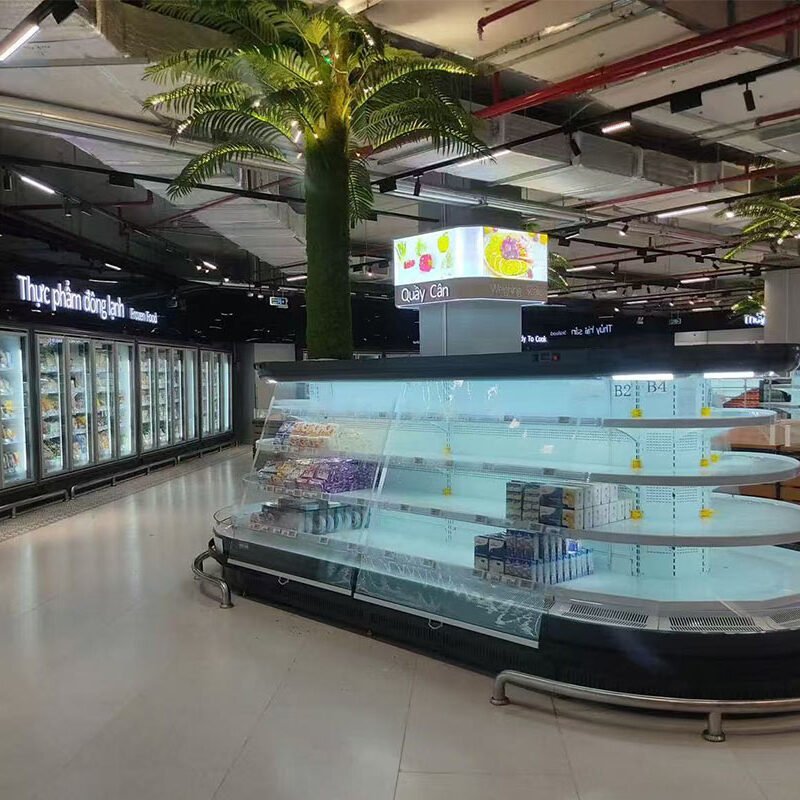
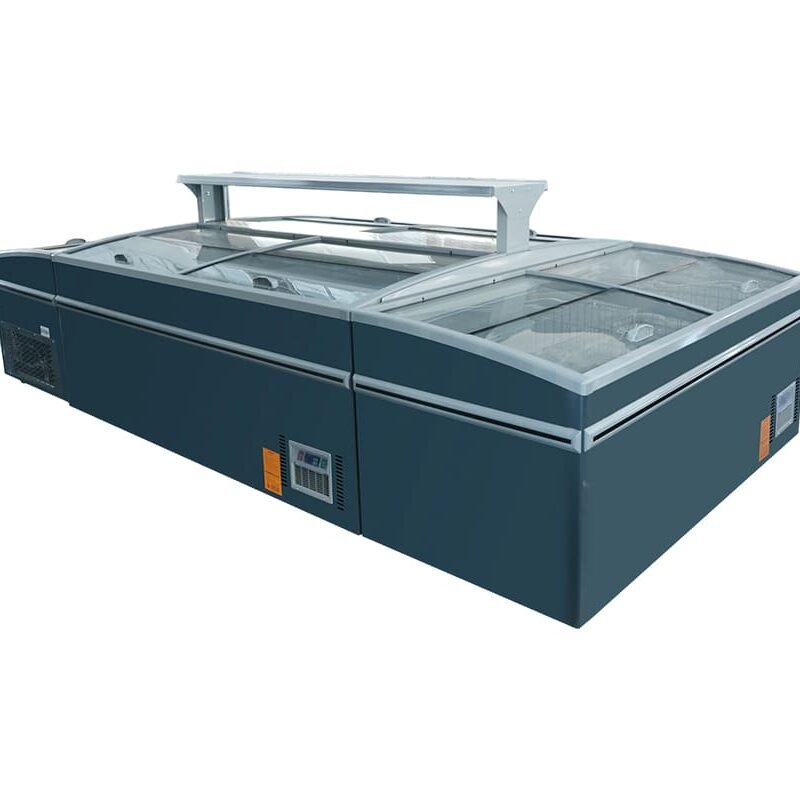
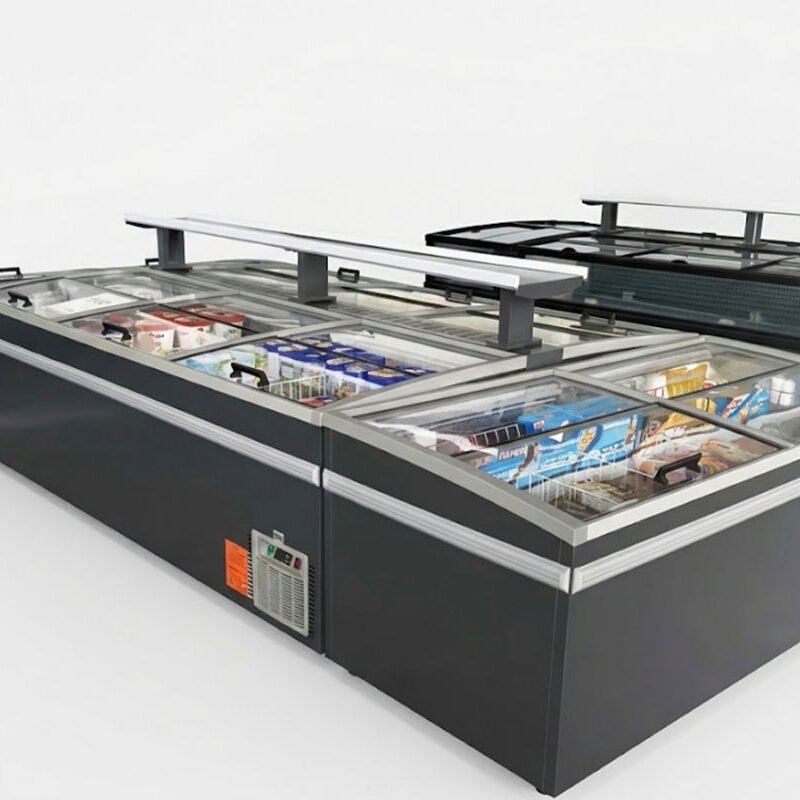
If you select the wrong island freezer, you face poor product visibility, unstable temperatures, and rising operating costs that affect daily business performance.
To choose the right one, you must evaluate design type, capacity, energy efficiency, and application requirements to ensure reliable cooling, effective product display, and controlled long-term operating costs. To avoid costly mistakes, you need to understand how island freezers function and what factors truly influence performance.
What Is an Island Freezer?
An island freezer is a commercial display freezer designed for horizontal frozen food presentation. When you use an island freezer, you rely on a horizontal commercial freezer display that allows customers to access frozen products from multiple sides.
This structure increases product exposure and improves customer interaction compared with upright freezers. You typically use island freezers for ice cream, frozen meat, seafood, and packaged foods in retail environments.
What Are the Key Benefits of Using an Island Freezer?
By installing an island freezer, you enhance visibility while maintaining large-capacity frozen storage. The open or glass-lid design encourages impulse purchases by allowing customers to view products at a glance, while the horizontal layout helps you use floor space more efficiently and improve aisle flow.
In busy retail settings, this type of commercial display freezer delivers consistent temperature performance, supports continuous operation, and reduces the risk of product quality loss during peak hours.
What Types and Designs of Island Freezers Are Available?
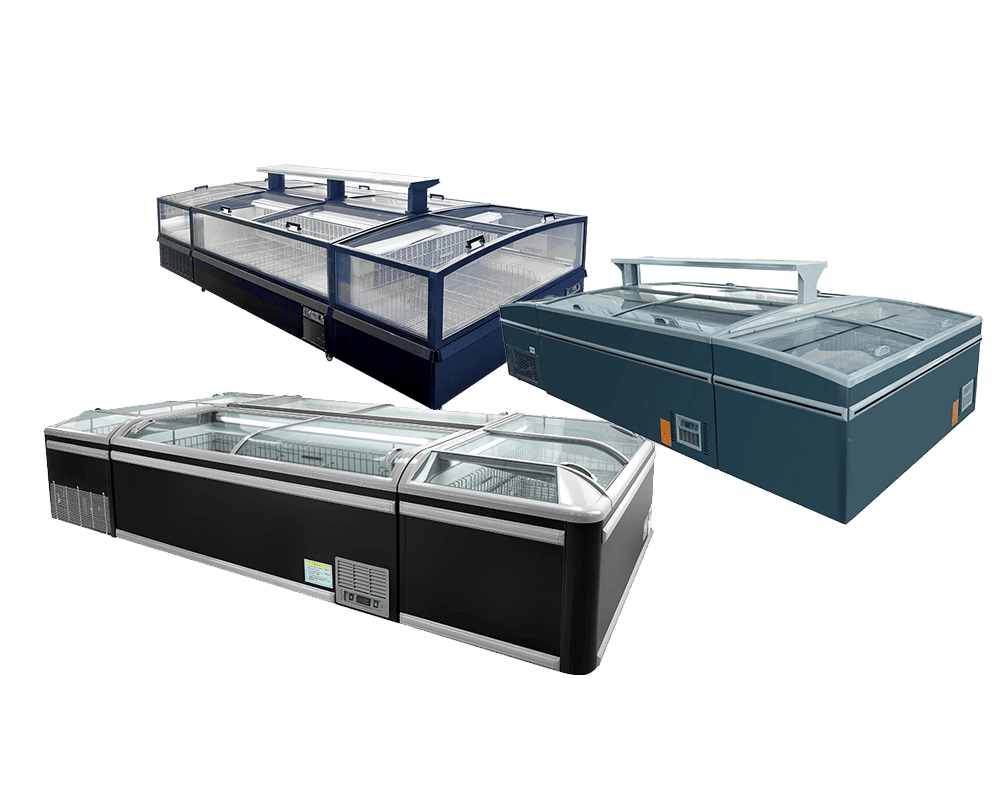
Island freezers are available in multiple configurations and customizable designs to match different retail environments, space limitations, and product requirements. The most common types and design options include the following.
Open-Top Island Freezers
These models feature an open structure or a soft removable cover, providing fast and convenient customer access. They are well suited for impulse-purchase products such as ice cream, frozen snacks, and small packaged items. A built-in air curtain system helps reduce cold air loss and maintain stable internal temperatures, while the low-profile design ensures high visibility from all sides.
Sliding Glass Door Models
Sliding glass door island freezers use one to four tempered glass doors to improve energy efficiency by limiting cold air escape. They are commonly used for frozen meat, seafood, and premium frozen products that require more stable temperature control. Anti-fog glass treatment ensures clear product visibility even in high-humidity retail settings.
Flat and Curved Glass Lid Designs
Glass-lid island freezers are available with flat or curved glass designs. Flat glass lids are durable, easy to clean, and integrate well into modern, minimalist store layouts. Curved glass lids enhance product presentation by offering a wider viewing angle, making products more visually appealing in promotional or high-end display areas.
Single and Dual Temperature Zone Models
Single temperature zone island freezers operate within a consistent freezing range and are suitable for storing similar frozen products, allowing for simplified operation and maintenance. Dual temperature zone models divide the cabinet into separate compartments with independent temperature control, enabling different frozen product categories to be displayed within one unit while conserving floor space.
Customized OEM and Private-Label Solutions
For businesses with specific layout or branding requirements, manufacturers provide customized island freezer solutions. These include tailored dimensions to fit unique floor plans, exterior finishes that align with brand identity, and optional features such as LED lighting, adjustable internal components, and digital temperature control systems.
Essential Selection Tips for Island Freezers
With a clear understanding of island freezer designs and benefits, the final step is to follow key selection tips to choose a model that aligns with your business needs and long-term goals.
- Match the freezer size to your store layout. Before making a selection, accurately measure the available floor space and the width of adjacent aisles. Ensure the freezer’s size leaves enough room for customers to move freely and for staff to restock products easily, avoiding overcrowding that hinders customer experience or operational efficiency.
- Prioritize temperature stability over initial cost. Avoid compromising on quality for a lower upfront price. Invest in an island freezer with a reliable, high-performance refrigeration system that can maintain consistent temperatures even during peak store hours or high ambient temperatures. This prevents product spoilage, preserves quality, and reduces potential losses.
- Evaluate energy efficiency for long-term savings. Commercial freezers run continuously, so energy efficiency directly impacts monthly electricity bills. Look for models with energy-saving certifications or advanced features like thick insulation layers, energy-efficient compressors, and smart defrost systems. These features not only cut long-term operating costs but also support sustainable business operations.
- Select the right lid design for your products. Align the lid type with your primary product offerings: Open-top models are perfect for impulse-buy items as they allow instant customer access, boosting spontaneous purchases. Glass-lid designs, on the other hand, minimize cold air loss compared to open-top models, making them ideal for temperature-sensitive or high-value goods.
- Consider product mix and storage flexibility. If your store sells multiple categories of frozen products, opt for models with adjustable shelves, removable baskets, or dual temperature zones. Dual-zone freezers let you set different temperatures for different products, eliminating the need to purchase multiple units and saving valuable floor space.
- Check certifications and manufacturing standards. Ensure the island freezer meets relevant commercial safety and quality certifications to guarantee compliance with local regulations. Certified models are tested for durability, refrigerant safety, and electrical safety, reducing the risk of equipment failure or safety hazards in a commercial setting.
- Plan for maintenance and after-sales support. You should choose a manufacturer or supplier that offers reliable after-sales service, including responsive technical support, easy access to replacement parts, and a clear warranty policy. With an experienced manufacturer like Eddysen, you can also customize island freezer specifications, finishes, and functional configurations to match your operational needs. Prompt maintenance reduces downtime, extends equipment lifespan, and protects your long-term commercial display freezer investment.
In Conclusion
When you choose an island freezer correctly, you improve product visibility, operational efficiency, and cost control while ensuring stable performance. Careful selection protects your commercial display freezer investment long term.