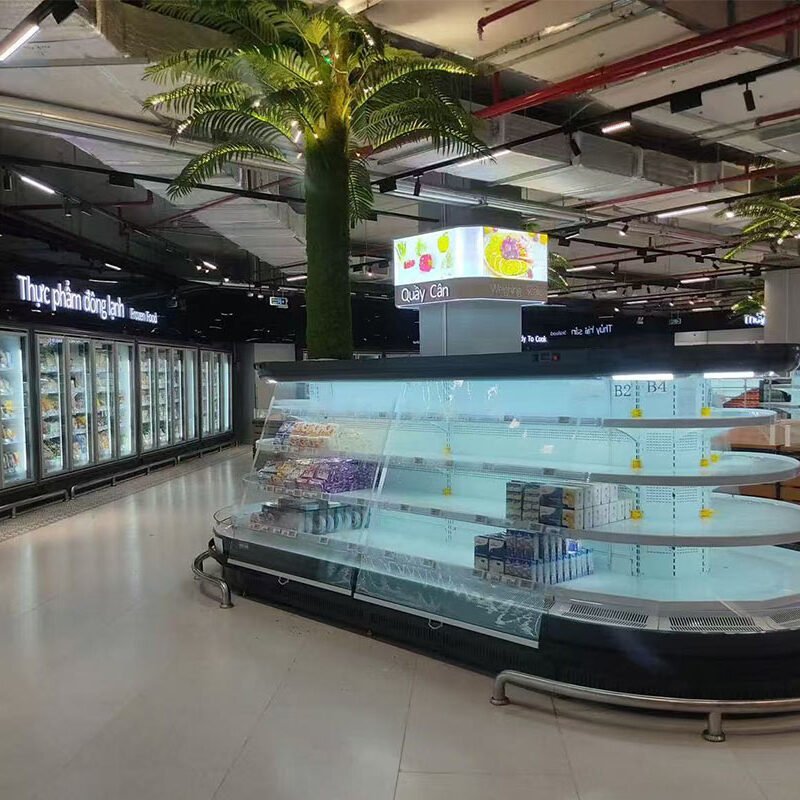
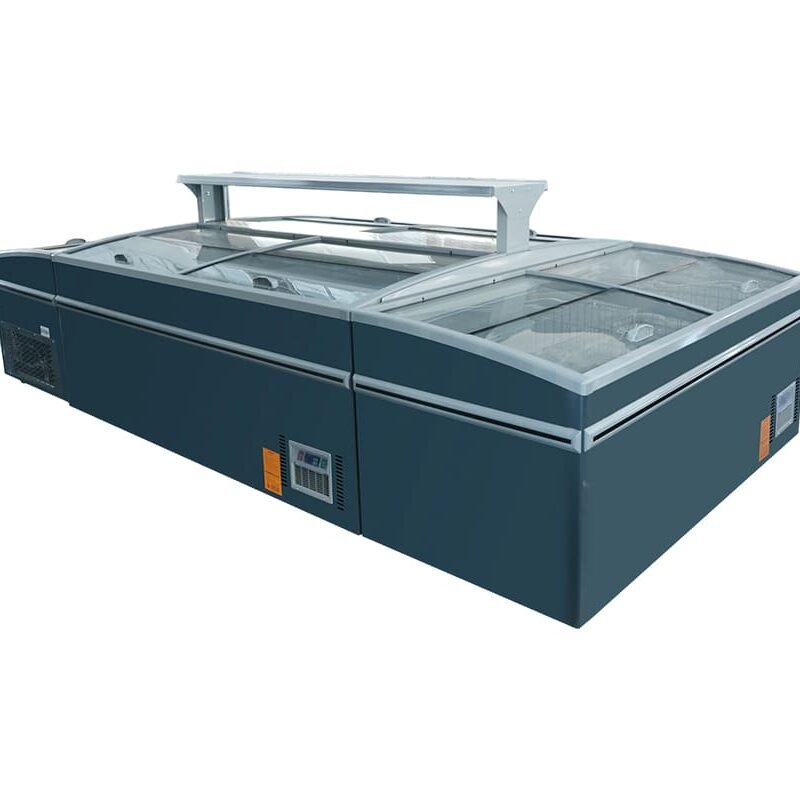
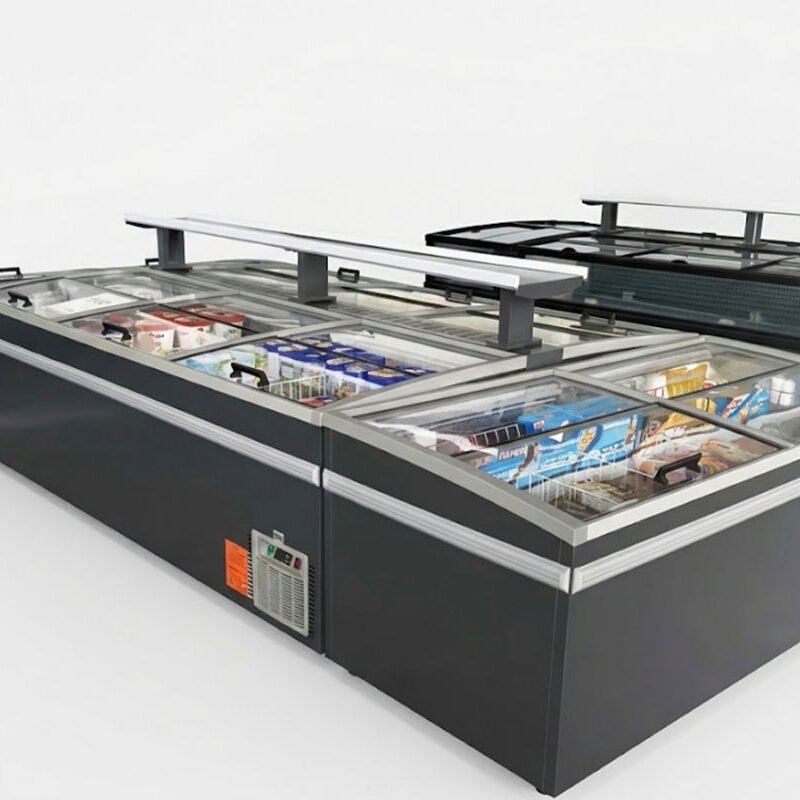
Choosing the wrong display refrigerator does more than affect appearance. It increases product loss, energy consumption, and operational complexity over time. For stores and supermarkets, fresh products make up a large part of revenue and help build customer loyalty. A suitable display refrigerator is not just a storage tool. It is a core asset that directly affects food safety, customer experience, and long-term profitability.
To make a smart decision, you need to fully consider how refrigeration performance, layout compatibility, system reliability, and even merchandising functions impact daily operations, cost control, and sales growth.
The following explain not only what you should focus on, but also why each choice has a lasting impact on your business. They are based on real challenges that stores and supermarkets face when using refrigeration equipment around the clock.
Tip 1: Start With The Products You Plan to Display
You should first identify what products you will display and the conditions they need to stay fresh, because refrigeration is not a one-size-fits-all solution. Different products require specific temperature ranges, humidity levels, and airflow patterns. When refrigeration conditions do not match the product, shelf life shortens and quality declines quickly.
Fresh meat typically requires a low, stable temperature between 0 and 4°C with controlled airflow to prevent surface moisture buildup and bacterial growth. Deli items perform best at 2 to 6°C with higher humidity to avoid drying out. Dairy products need consistent temperatures between 2 and 4°C and gentle airflow to protect texture and flavor. Fruits and vegetables usually require higher humidity and moderate temperatures to prevent wilting or structural damage. Frozen foods must remain at -18°C or lower with strong insulation to avoid thawing and refreezing.
When a display refrigerator is not designed for the intended products, temperature stratification and moisture imbalance occur. These issues accelerate spoilage, increase shrinkage, and directly reduce your profit. Understanding your product requirements is the foundation for choosing the right display refrigerator.
Tip 2: Make Temperature Stability a Top Priority
You should value temperature stability more than raw cooling strength. In real retail environments, frequent door openings, restocking, and customer traffic constantly disturb internal temperatures. Even small fluctuations can lead to faster spoilage, texture changes, and food safety risks, especially for fresh and ready-to-eat items.
A well-designed system keeps temperatures uniform across all shelves, front to back and top to bottom. High-precision sensors, even airflow, and smart defrosting help the unit recover quickly after temperature disturbances. This is critical for a deli meat display case or glass door display fridge, where unstable temperatures directly reduce shelf life and increase shrinkage.
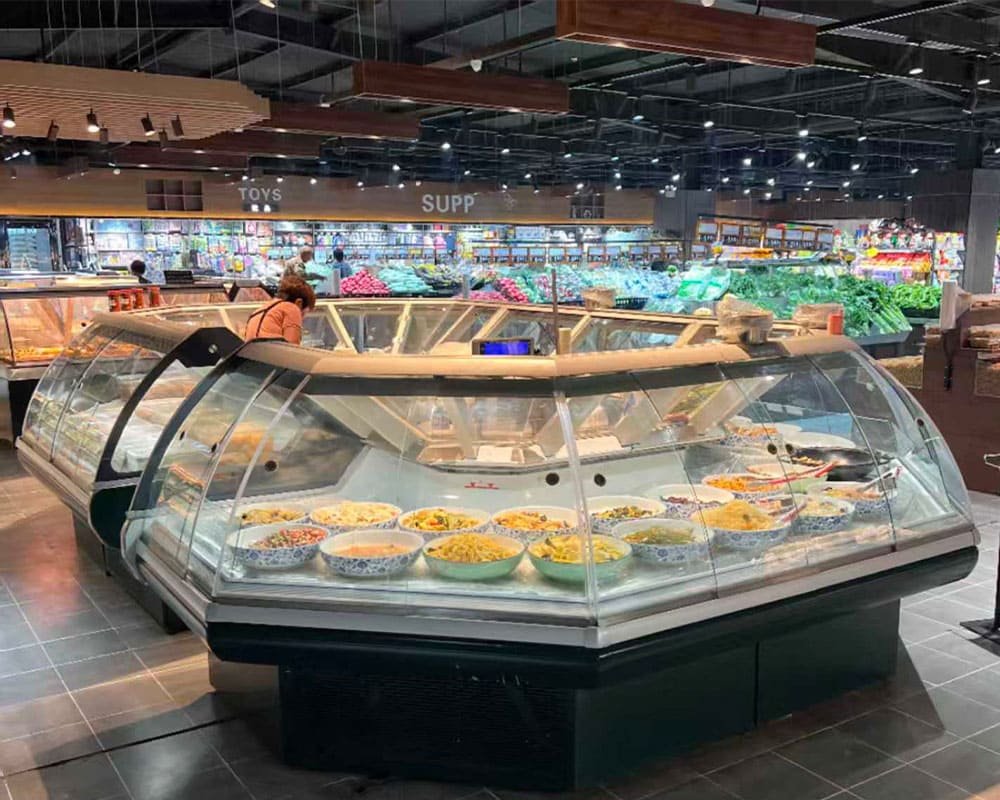
Stable temperature performance also helps you meet food safety regulations. Reliable control reduces inspection risks, protects your store reputation, and lowers waste caused by uneven cooling.
Tip 3: Choose a Cooling System Suitable for High-traffic Use
You should select a cooling system based on how busy your store is, not just on size or price. High-traffic supermarkets need fast recovery after doors open and consistent cooling during peak hours. Slow systems struggle under constant load and cause uneven temperatures.
An air curtain refrigerator is ideal for these environments. Continuous airflow forms a cold air barrier that limits warm air intrusion and restores temperature quickly. This design performs far better than direct cooling in large cabinets and open displays.
Direct cooling systems recover slowly and often create hot spots, making them more suitable for low-traffic stores or non-sensitive products. For frozen goods, a well-insulated island freezer with strong airflow ensures consistent low temperatures even during heavy customer use.
Tip 4: Optimize Space With the Right Cabinet Design
You should see cabinet design as a sales driver, not just storage. Poor layouts waste floor space, block customer flow, and hide products. In small stores, inefficient design directly limits revenue per square meter.
Different cabinet types serve different purposes. Wall-mounted units save space, corner cabinets utilize neglected areas, and island units attract attention from all directions. An island freezer works especially well for promotions and high-turnover frozen items.
Tip 5: Consider Long-term Energy Consumption, Not Just Price
You should focus on total ownership cost instead of upfront price. Display refrigerators run nonstop, so electricity use quickly surpasses the purchase cost. Cheaper units often consume more power and cost more over time.
Energy-efficient models with certified ratings significantly reduce daily energy use. Over several years, the savings can be substantial, especially for large supermarkets operating multiple units like glass door display fridges and freezers.
Durability also matters. High-quality, efficient units last longer and reduce replacement, repair, and downtime costs. This makes energy-efficient refrigeration a smarter long-term investment.
Tip 6: Pay Attention to Visibility and Merchandising Impact
You should treat display refrigeration as part of your merchandising strategy. Clear visibility improves perceived freshness and directly influences buying decisions. Customers are far more likely to purchase what they can see clearly.
High-transparency, anti-fog glass is essential for any glass door display fridge. It keeps products visible even during temperature changes. Proper LED lighting further enhances color and freshness without adding heat.
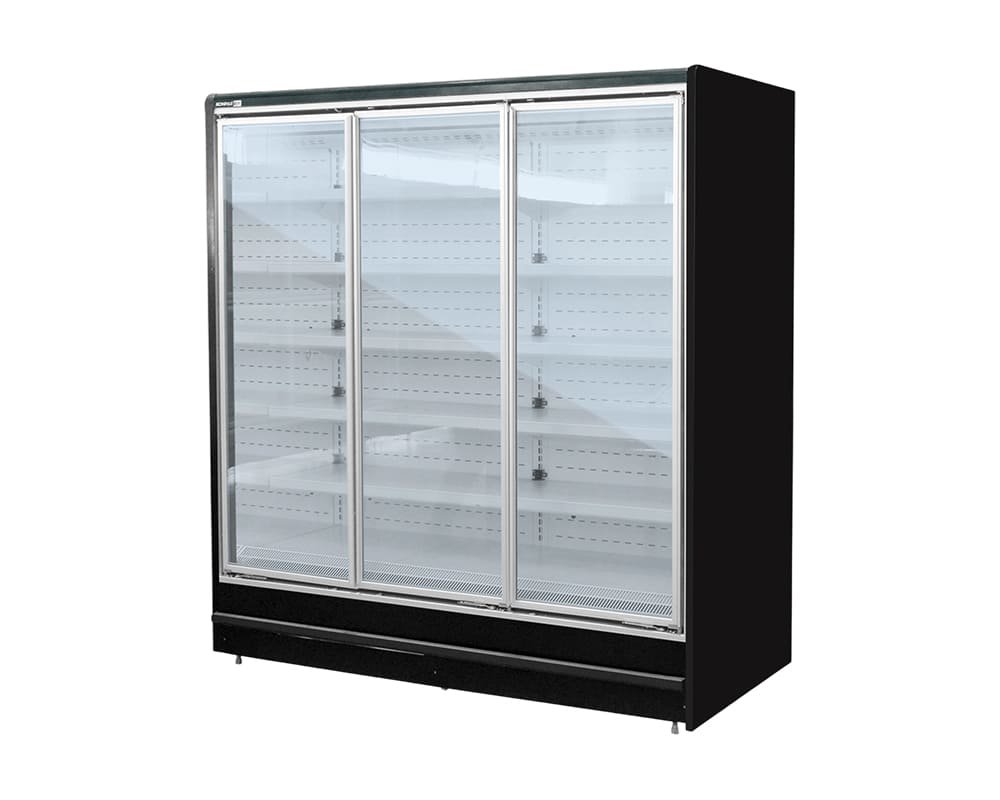
Shelf design also matters. Inclined or layered shelves improve label visibility and product density. Placing high-margin items at eye level increases impulse purchases and overall basket value.
Tip 7: Evaluate Ease of Cleaning And Maintenance
You should prioritize designs that simplify cleaning and maintenance. Food spills and dust are unavoidable, and complex structures increase labor time while creating hygiene risks.
Smooth liners, rounded corners, and removable shelves make daily cleaning faster and more effective. This is especially important for a deli meat display case, where hygiene directly affects customer trust and food safety.
Easy access to compressors and condensers reduces service time and downtime. Digital controls and alarm systems help you identify problems early, preventing product loss and extending equipment life.
Tip 8: Work With a Manufacturer You Can Rely On
You should choose a manufacturer as a long-term partner, not just a supplier. A reliable manufacturer understands real retail operations and designs equipment that performs consistently in demanding environments. With proven industry experience, Eddysen focuses on stable performance, food safety, and long-term cost efficiency, helping your store operate smoothly every day.
Strong customization capabilities allow you to match refrigeration precisely to your store layout and product mix. Whether you need compact solutions, modular air curtain refrigerators, or large-capacity island freezers, Eddysen offers flexible customization in size, configuration, and finish. These tailored solutions improve space utilization, enhance visual consistency, and strengthen your brand image at the point of sale.
In Conclusion
Choosing the best display refrigerator for your store or supermarket requires more than focusing on looks or upfront price. You should treat it as a long-term investment and evaluate key factors such as product storage needs, temperature stability, cooling performance, cabinet design, energy efficiency, merchandising impact, ease of maintenance, and manufacturer reliability.