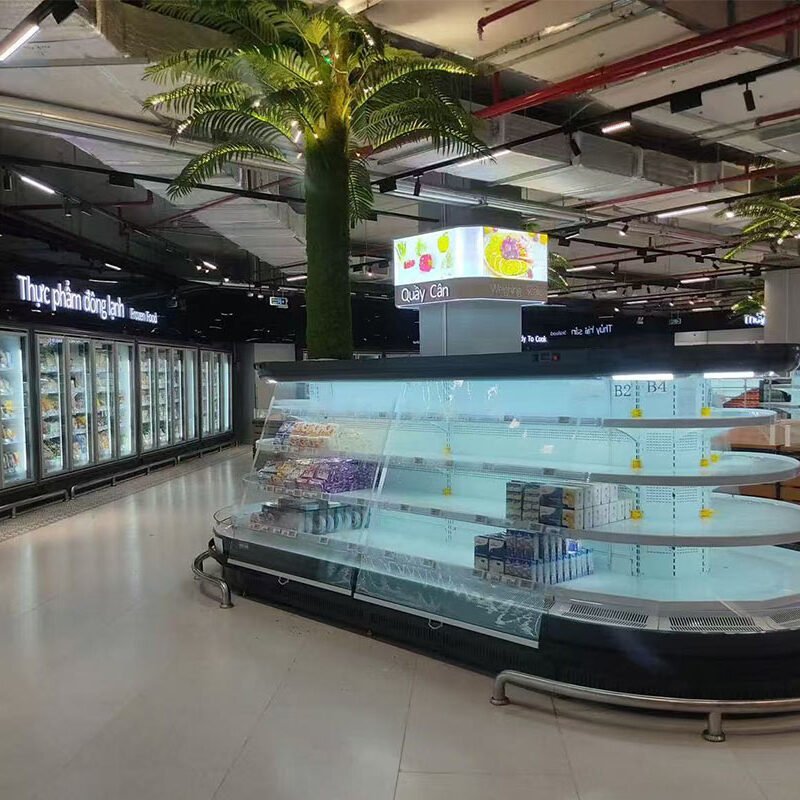
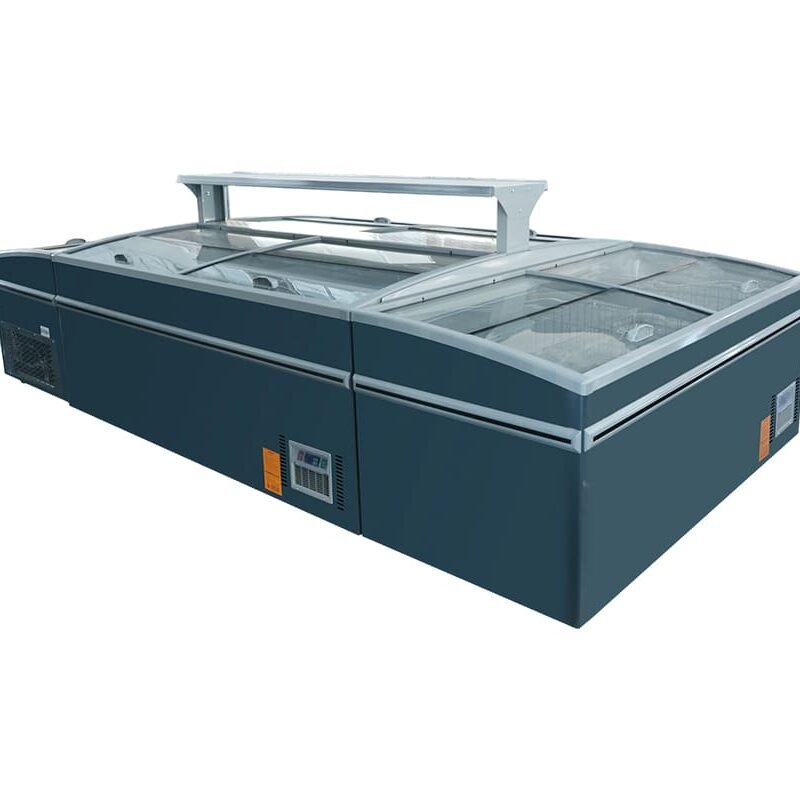
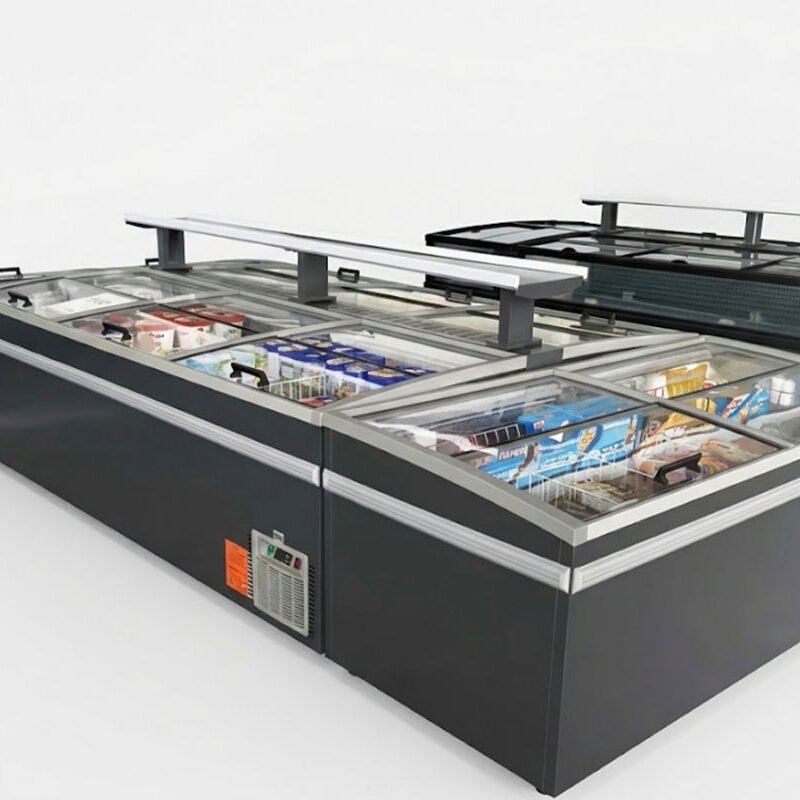
Ice buildup reduces cooling efficiency, increases maintenance, and risks food quality. Frost free technology solves these issues through stable airflow and automatic defrosting. A frost free fridge uses a forced air cooling system and automatic defrost control to prevent ice formation. You benefit from uniform temperature distribution, consistent food safety, lower maintenance costs, and reliable performance in commercial refrigeration environments.
To choose the right solution, you need to understand how frost free systems work and where they perform best.
What Does Frost Free Mean in Commercial Refrigeration?
In commercial refrigeration, frost free refers to an automatic refrigeration system designed to prevent ice buildup without manual defrosting. Unlike static cooling systems that allow moisture to freeze on evaporators, frost-free units actively manage humidity and temperature through controlled airflow and scheduled defrost cycles.
Cold air is continuously circulated throughout the cabinet, preventing localized cold spots where frost typically forms. At the same time, excess moisture is removed before it can condense and freeze. This keeps evaporator coils, interior walls, shelves, and air ducts free of ice, ensuring consistent cooling performance.
For applications such as supermarket display refrigerators, beverage coolers, and commercial upright fridges, frost-free operation is critical. It maintains clear product visibility, eliminates downtime caused by manual defrosting, protects food quality, and supports stable, food-safe temperatures during long operating hours.
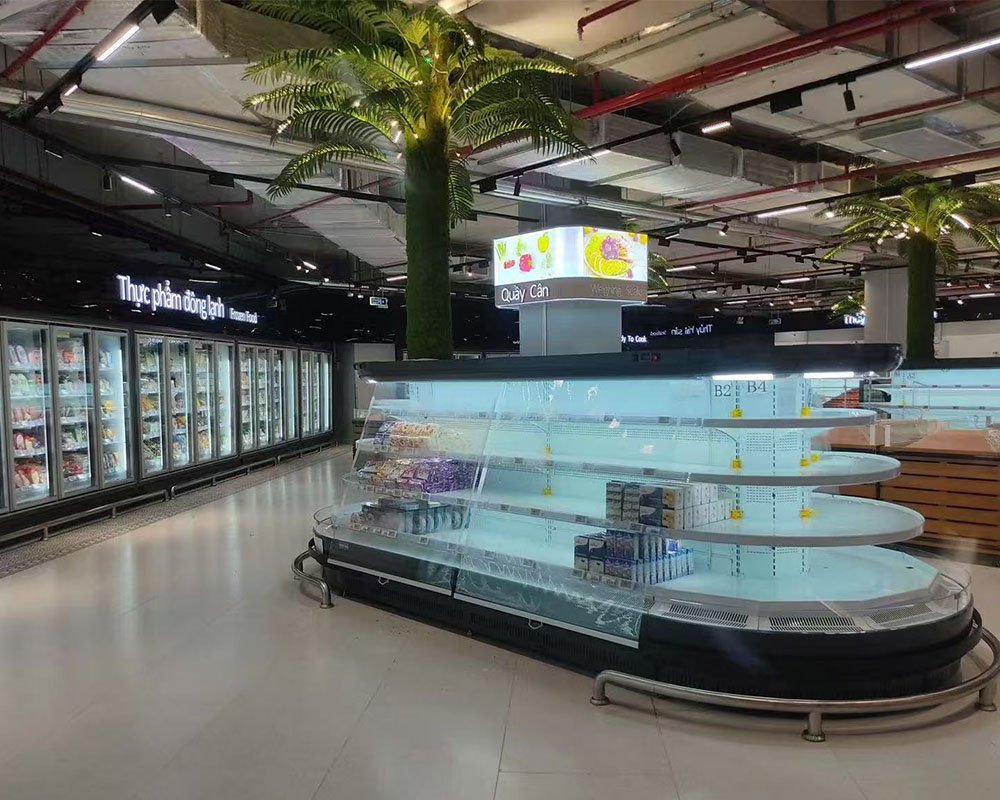
How Does a Frost Free Fridge Work?
A frost-free commercial refrigerator relies on a fan-assisted, forced-air refrigeration system combined with intelligent defrost control. Multiple components work together to manage cooling, airflow, and moisture removal.
1. Forced Air Circulation System
High-efficiency fans draw air across the finned evaporator coils, where heat is absorbed and the air is cooled. This chilled air is then evenly distributed throughout all display zones, shelves, and compartments. Continuous circulation prevents temperature stratification and minimizes condensation.
2. Moisture Control and Ice Prevention
As warm air enters the cabinet, especially during frequent door openings, moisture is carried with it. The airflow system directs this humid air back to the evaporator, where moisture condenses and drains away before it can freeze on interior surfaces.
3. Automatic Defrost Cycle
To prevent frost buildup on the evaporator itself, the system includes electric defrost heaters and a timed or sensor-controlled defrost cycle. At preset intervals, the refrigeration process pauses briefly while heaters melt any accumulated frost on the evaporator coils. Meltwater is safely drained and evaporated outside the cabinet.
This process is automatic and does not interrupt product cooling, as thermal mass and insulated cabinet design maintain stable temperatures.
4. Electronic Temperature Control
Advanced digital controllers and temperature sensors constantly monitor cabinet conditions. They regulate compressor operation, fan speed, and defrost timing to ensure accurate temperature control, fast pull-down, and rapid recovery after door openings.
5. Commercial-Grade Refrigeration Components
A frost-free system typically integrates:
- Copper refrigeration pipelines for efficient heat transfer
- High-performance compressors
- Large-surface finned evaporators
- Energy-efficient axial or centrifugal fans
- Intelligent control boards for precise system coordination
This configuration is widely used in upright display refrigerator production, where reliability, energy efficiency, and temperature uniformity are essential for continuous retail operation.
Advantages of Frost Free Fridges for Supermarket Display
Frost free refrigeration systems provide practical and performance-driven benefits for supermarket display applications, especially in environments with long operating hours and frequent customer access.
Continuous Cooling Without Ice Buildup
Frost free systems use automatic defrost cycles to prevent ice accumulation on evaporators, air outlets, and interior surfaces. This eliminates the need for manual defrosting, reduces operational downtime, and ensures uninterrupted refrigeration performance throughout daily business operations.
Stable Temperature Distribution
Fan-assisted airflow distributes cold air evenly across all shelves and display zones, minimizing temperature fluctuations caused by frequent door openings or product replenishment. This consistent cooling helps maintain food-safe temperatures and protects product quality.
Clear Product Visibility
By preventing condensation and frost formation on glass panels and interior surfaces, frost free refrigeration keeps displays clear and visually appealing. Products remain fully visible at all times, supporting effective merchandising and a better shopping experience.
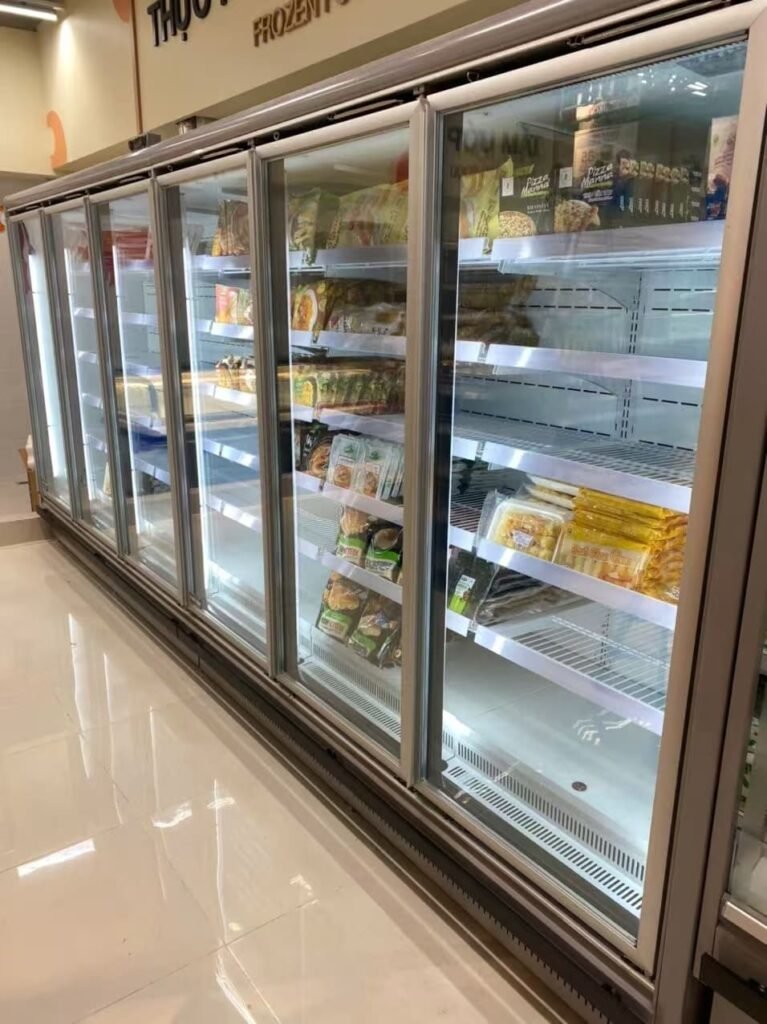
Optimized Performance for Open Display Designs
In open chiller for supermarket layouts and air curtain fridge designs, frost free systems maintain continuous and balanced airflow. This supports stable air curtains, reduces cold air loss, and allows products to remain easily accessible without compromising cooling efficiency.
Lower Maintenance and Operating Costs
Automatic defrosting reduces labor requirements for ice removal and cleaning. At the same time, unobstructed airflow improves energy efficiency and reduces stress on key components, helping extend equipment service life and lower overall operating costs.
How to Choose the Right Frost Free Fridge for Your Business?
Selecting the right frost free fridge requires evaluating key design and manufacturing factors that impact long-term performance in supermarket operations.
- Cabinet Structure & Insulation
Choose cabinets with high-density insulation to reduce cold loss and improve energy efficiency. Precise cabinet construction supports stable internal temperatures. - Manufacturing Accuracy
CNC bending and laser-cut panels ensure tight seams, accurate door alignment, and smooth airflow. Poor tolerances can cause air leakage and uneven cooling. - Refrigeration Components
Check the quality of compressors, evaporators, fans, and electronic controllers. Properly sized evaporators and durable fan motors are essential for consistent frost free operation. - Defrost & Temperature Control
Intelligent defrost systems and digital controllers help maintain stable temperatures, especially during frequent door openings. - Assembly & Quality Testing
Standardized assembly processes and factory-tested cooling systems ensure reliable performance under continuous supermarket use.
Eddysen: Your Trusted Frost-Free Refrigeration Expert
When you choose Eddysen, you work with a manufacturer experienced in frost free commercial refrigeration. You benefit from automated production lines, stable supply chains, OEM and ODM capabilities, and professionally engineered solutions for global supermarket and retail applications.
In Conclusion
A frost free fridge delivers stable cooling, low maintenance, and superior display performance, making it essential for modern commercial refrigeration and supermarket operations.