To choose the right commercial chest freezer, you should assess capacity, temperature stability, energy efficiency, and retail application needs. The right solution supports reliable freezing, efficient inventory management, and long-term cost control for supermarket freezers and commercial food operations.
By understanding the key factors below, you can invest in refrigeration equipment that truly supports your business growth.
What is a Commercial Chest Freezer?
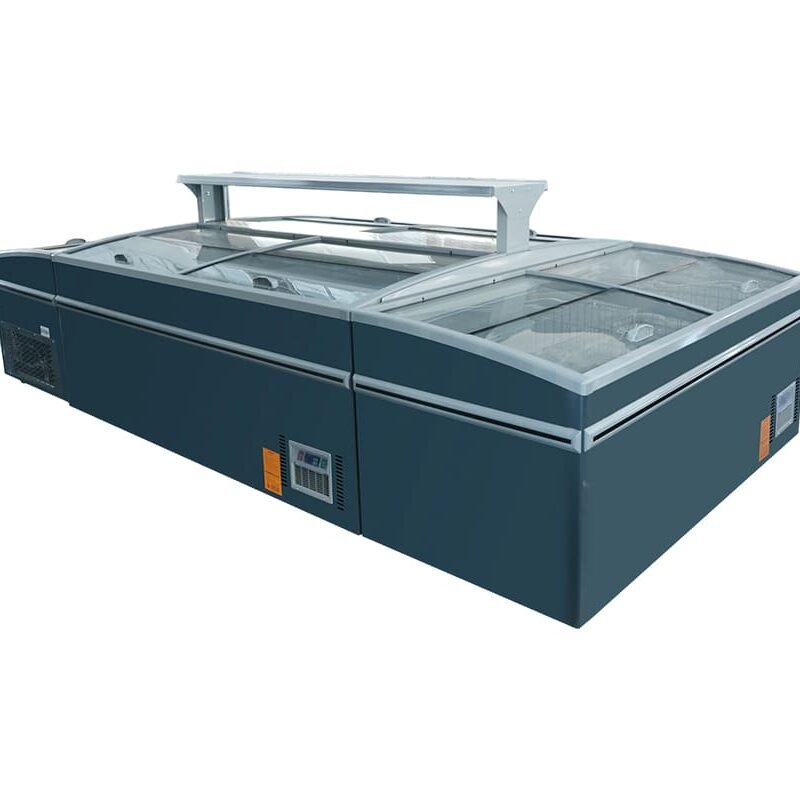
A commercial chest freezer is engineered for professional use with industrial-grade compressors, high-density insulation foaming, and reinforced cabinet structures. You rely on it to operate continuously in high-load retail and food service scenarios.
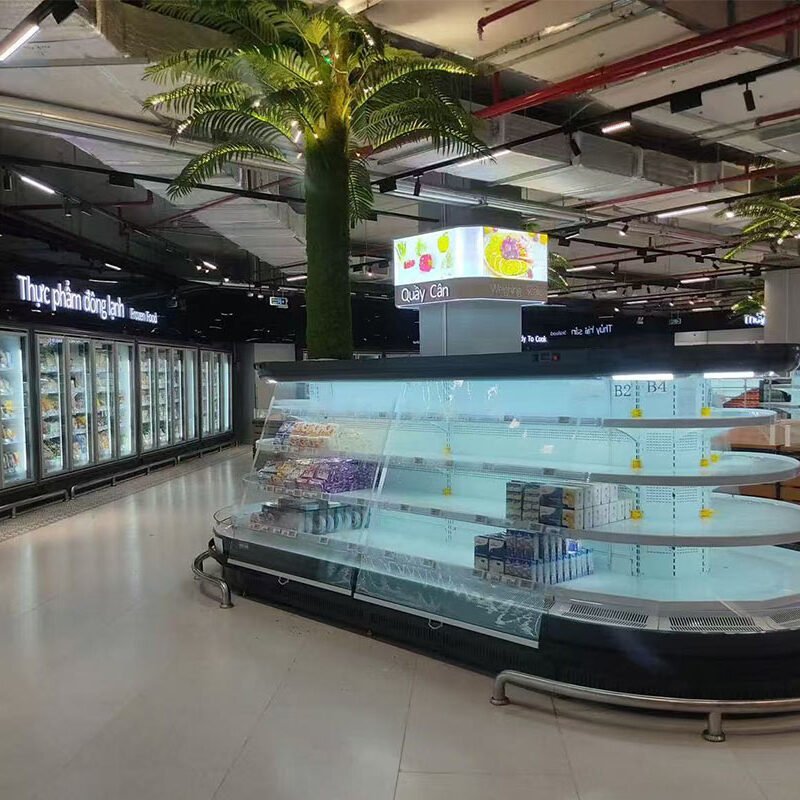
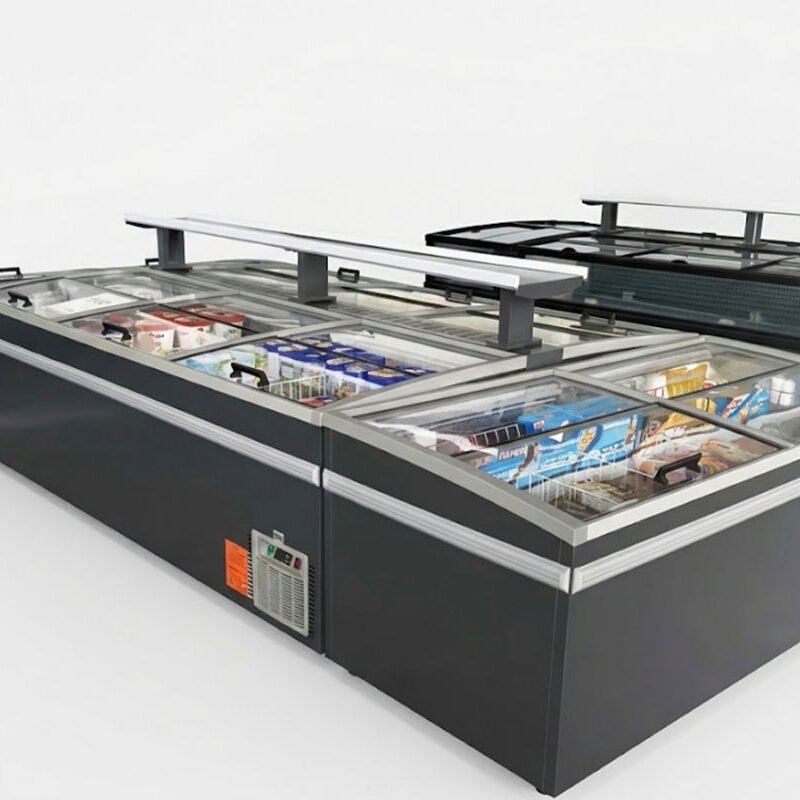
In supermarkets, it often works together with a supermarket display freezer or combined island freezer, forming a complete cold chain system that separates storage functions from customer-facing display functions.
What Size Chest Freezer Do I Need?
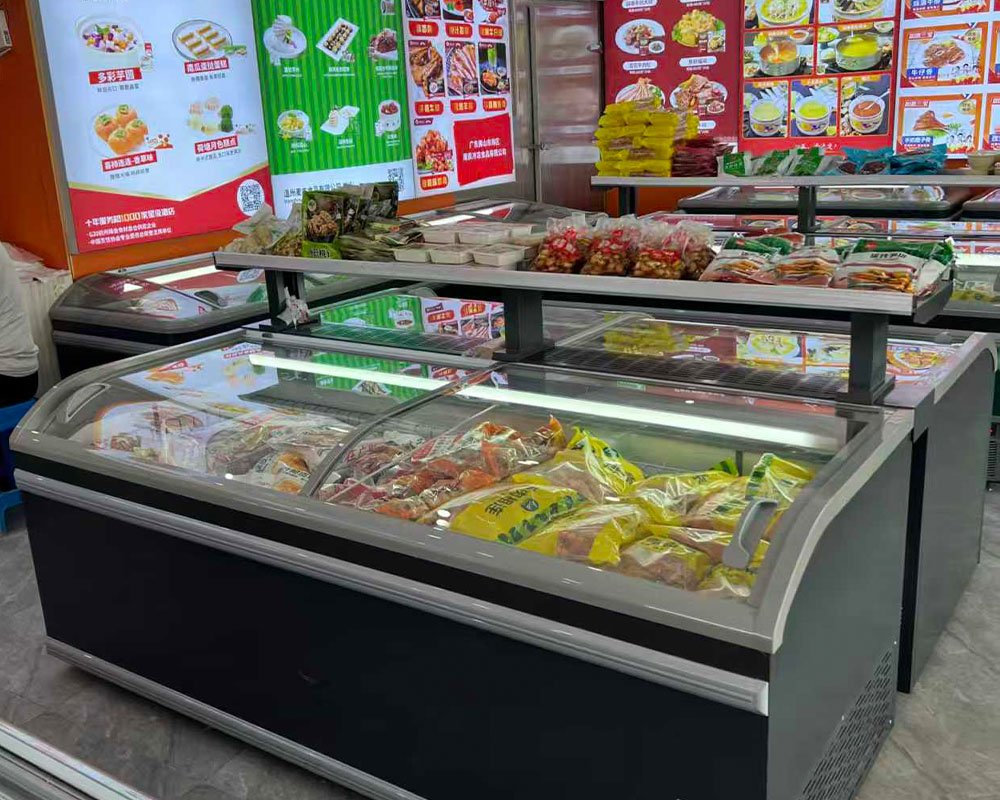
Selecting the correct size depends on your available floor space, daily sales volume, and product turnover rate. You should also consider whether the freezer will be used for long-term storage or fast-moving promotional items. For large retail formats, multiple units or a Combined Island Freezer layout can optimize space utilization. Smaller stores may benefit from compact models that still provide sufficient storage capacity without disrupting store flow.
| Business Type | Recommended Capacity | Typical Application |
|---|---|---|
| Convenience store | Small to medium | Ice cream and frozen snacks |
| Supermarket | Medium to large | Bulk frozen food storage |
| Warehouse club | Large capacity | High-volume frozen products |
| Promotional area | Medium | Seasonal and discounted items |
The Advantages and Disadvantages of Chest Freezers
Chest freezers are the reliable heavy hitters of long-term cold storage. While they might lack the sleek look of upright models, their mechanical simplicity and physical design offer some distinct benefits along with a few logistical hurdles.
The Advantages of Chest Freezers
- Superior Energy Efficiency: Cold air is denser than warm air, so it stays settled at the bottom of the unit. When the top-loading lid is opened, the cold air remains trapped inside instead of spilling out like it does in upright models. This helps the unit maintain its temperature with much less effort.
- Massive Storage Capacity: These units lack fixed internal shelving and drawers, providing more total volume for your items. They are the perfect choice for bulky or irregularly shaped goods such as whole turkeys, large cuts of meat, or bulk bags of ice.
- Reliability During Power Outages: Thanks to thick insulation and the way cold air pools at the base, chest freezers can keep food frozen for 48 to 72 hours during a power failure. This is only possible if the lid remains closed to preserve the internal environment.
- Food Quality Preservation: Most chest units require manual defrosting. While this takes more work, it actually protects food from the dehydration caused by the heating cycles found in auto-defrost units. This keeps your inventory fresher for longer periods.
- Lower Initial and Operating Costs: In general, chest freezers are more affordable to purchase and cost less to run per cubic foot than their upright counterparts.
The Disadvantages of Chest Freezers
- Organizational Struggles: The biggest challenge is the lack of structure. Items at the very bottom are often forgotten for months, which can lead to unnecessary food waste. You frequently have to move several layers of frozen goods just to find what you need.
- Large Floor Footprint: These units require significant horizontal floor space. They cannot be tucked into narrow corners or tight gaps like upright units, making them a tough fit for smaller kitchens or crowded stockrooms.
- Physical Accessibility: Reaching the bottom of a deep freezer can be physically straining. Managing inventory is much more labor-intensive because it involves constant bending and lifting.
- Manual Maintenance: Defrosting a chest freezer is a major chore. You must remove all the food, wait for the ice to melt, and drain the water manually. This process can take several hours and requires careful planning.
- Limited Visual Merchandising: For retail environments, customers cannot see the products unless they are standing directly over the unit. This makes them a poor choice for encouraging quick purchases compared to glass-door display freezers.
Key Features to Consider When Buying Commercial Chest Freezers
When evaluating commercial chest freezers, you should look beyond basic cooling and focus on system reliability, structural engineering, and operational efficiency that support long-term commercial use and high-frequency retail scenarios.
- Refrigeration system stability
You should prioritize freezers equipped with proven commercial-grade compressors and optimized refrigeration circuits. Stable systems ensure consistent freezing performance during continuous operation, frequent lid opening, and peak sales hours without temperature fluctuation. - Temperature uniformity and control accuracy
Uniform airflow design and precise temperature controllers help maintain consistent internal temperatures across the entire cabinet. This is critical for protecting sensitive frozen products such as ice cream and seafood from partial thawing or frost damage. - Cabinet structure and insulation performance
A robust cabinet made with high-strength sheet metal and high-density polyurethane insulation significantly reduces cold loss. Better insulation not only improves freezing efficiency but also lowers long-term energy consumption and operating costs. - Heat exchange efficiency
Copper tubing and well-designed condensers improve heat dissipation and refrigeration efficiency. Efficient heat exchange reduces compressor workload, minimizes wear, and extends the overall service life of the commercial chest freezer. - Defrosting and drainage design
Well-designed manual or automatic defrost systems simplify maintenance and help keep the interior clean. Proper drainage structure prevents water accumulation and supports hygienic operation in food retail environments. - Storage baskets with dividers
Full baskets with dividers allow you to separate different product categories clearly. This improves inventory visibility, speeds up restocking, and reduces product damage caused by stacking or frequent handling. - Tempered glass lids and sealing performance
High-quality tempered glass lids improve product visibility while maintaining strong sealing performance. This combination is especially important in supermarket display freezer applications, where both energy efficiency and visual merchandising matter. - Interior LED lighting system
LED lighting enhances product presentation without adding excess heat inside the cabinet. Energy-efficient lighting supports long operating hours and improves the overall shopping experience for customers. - Mobility and structural support
Heavy-duty caster wheels with strong load-bearing capacity allow easy movement, flexible store layout changes, and convenient cleaning. Reinforced base structures ensure stability even when the freezer is fully loaded. - Material durability and surface treatment
Anti-corrosion coatings and wear-resistant finishes protect the cabinet from humidity, cleaning chemicals, and daily mechanical stress, ensuring reliable performance in demanding supermarket environments.
OEM and Supplier Reliability Considerations
When choosing a supplier, you should assess manufacturing experience, automation level, and quality management systems. Professional manufacturers rely on CNC stamping, laser cutting, automated bending, and standardized assembly processes to ensure consistent product quality across large-scale production. EDDYSEN brings nearly two decades of experience in commercial refrigeration manufacturing, supported by an 80,000㎡ modern factory and a fully automated production line. With ISO 9001 and ISO 14001 certified management systems, as well as CE and 3C product certifications, you benefit from stable quality control, reliable performance, and compliance with international market requirements.
Reliable OEM and ODM partners should also offer flexible customization, stable lead times, and scalable capacity. EDDYSEN supports private labeling, structure customization, and application-specific solutions, while maintaining an annual production capacity of 200,000 units. This allows you to build a long-term, cost-effective, and competitive supermarket refrigeration supply chain with confidence.
InConclusion
Choosing the right commercial chest freezer means balancing storage capacity, energy efficiency, display strategy, and supplier reliability. With proven manufacturing strength and OEM capability, EDDYSEN helps you achieve sustainable and scalable retail performance.
Frequently Asked Questions
1. Should You Choose a Chest Freezer or a Glass Door Refrigerator Freezer Combo?
A chest freezer suits bulk storage and energy savings, while glass door combos improve product visibility and sales.
2. How Long Can I Store Food in a Chest Freezer?
You can store food in a chest freezer for long periods due to its stable low temperature. Most frozen foods remain safe for 6–12 months, while meats can last up to 12 months if properly packaged. Vacuum sealing and consistent temperature control help preserve quality and reduce freezer burn.
3. What Is the Temperature Range of Commercial Chest Freezers?
Commercial chest freezers typically operate between −18°C and −25°C. This range ensures food safety, slows bacterial growth, and maintains product quality. Advanced temperature controllers allow precise adjustment to meet different frozen storage and supermarket display requirements.