Choosing unsuitable supermarket refrigeration equipment can lead to temperature instability, higher energy consumption, and reduced product appeal. Retailers need a structured understanding of refrigerated display solutions to support daily operations and long-term growth.
Commercial refrigerated display equipment covers both chilled and frozen applications across supermarkets, convenience stores, and fresh food markets. Understanding how different refrigerated display systems perform in real retail environments helps businesses improve food safety, optimize energy efficiency, and enhance customer experience.
Below, we will explain the characteristics, advantages, and applications of each of the 8 types of commercial refrigerated display equipment.
Upright Glass Door Display Chillers
Upright glass door display chillers are designed for continuous operation in high-traffic retail environments where visibility, accessibility, and temperature stability are equally critical. These cabinets combine insulated glass doors with optimized airflow circulation to maintain uniform cooling from top to bottom.
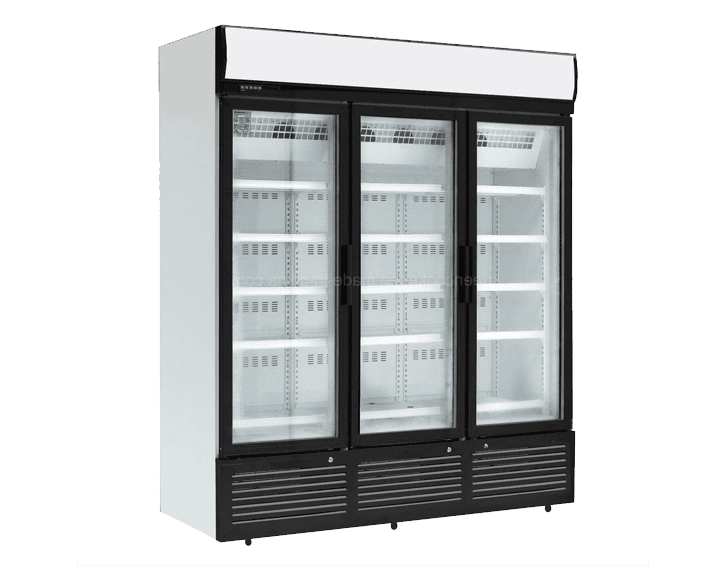
They are widely applied for dairy products, beverages, fresh fruits, and packaged chilled foods. Eddysen’s upright glass door display chillers integrate high-efficiency, energy-saving compressors and precise temperature control systems to ensure long-term reliability while reducing operating costs for supermarkets and convenience stores.
Air Curtain Refrigeratorts
Air curtain refrigerated display cabinets rely on engineered airflow barriers instead of physical doors to retain cold air. This design allows customers to access products quickly while preserving internal temperature stability.
They are particularly suitable for fresh produce, ready-to-eat foods, and high-turnover chilled items in modern supermarkets. Advanced airflow management minimizes cold loss during peak shopping hours, supporting food safety compliance and consistent product freshness across open display areas.
Upright Frozen Display Cabinets
Upright frozen display cabinets form a critical component of supermarket refrigeration systems, ensuring stable low-temperature storage for frozen foods. Their vertical configuration supports organized product layout while maximizing sales floor efficiency.
These cabinets are commonly used for ice cream, frozen seafood, and packaged frozen meals. Reliable temperature uniformity and durable construction allow them to operate continuously without compromising product integrity or display clarity.
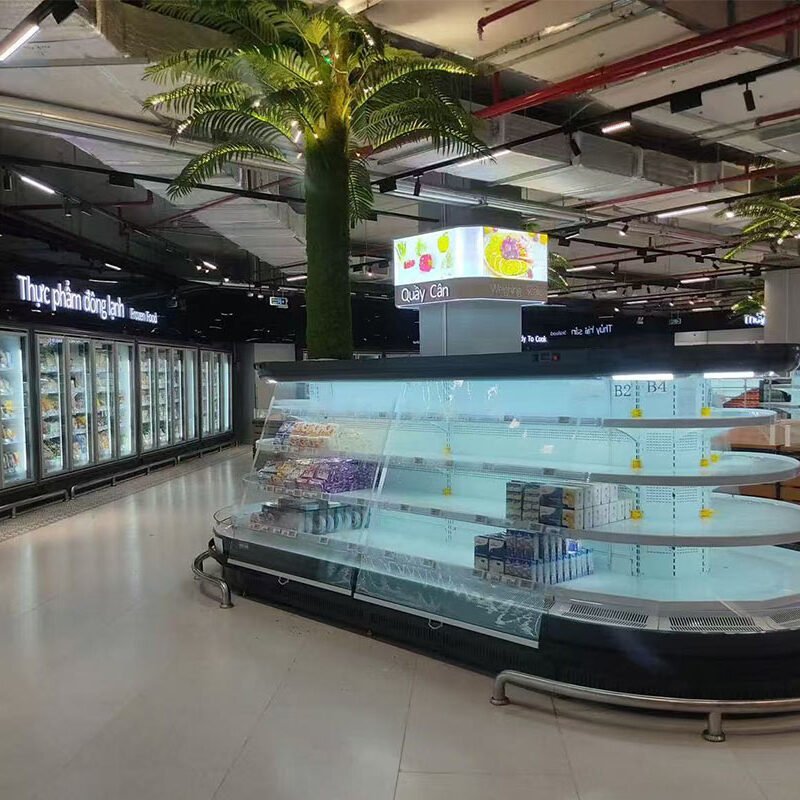
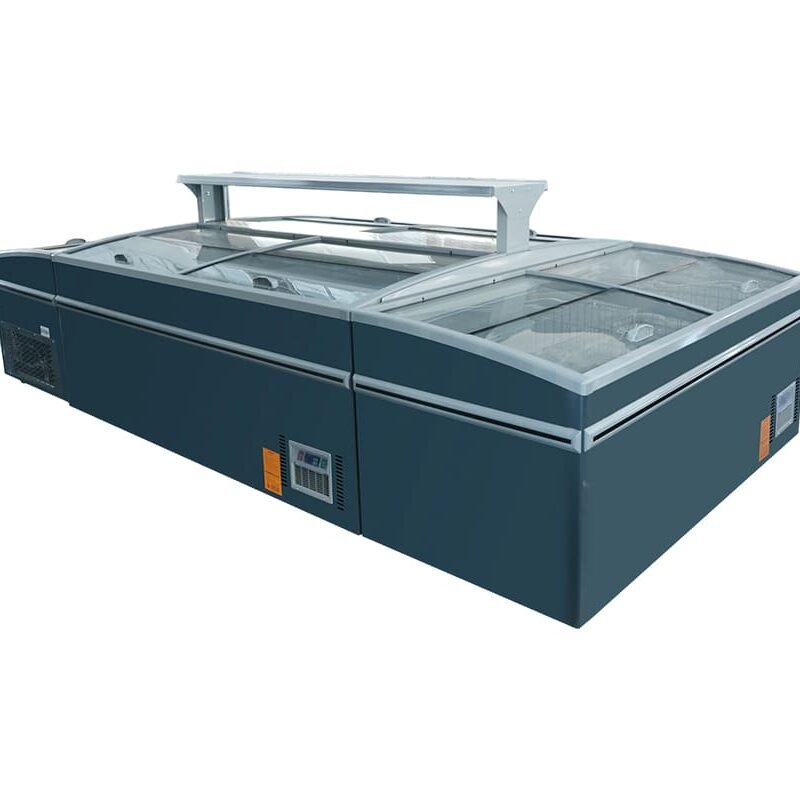
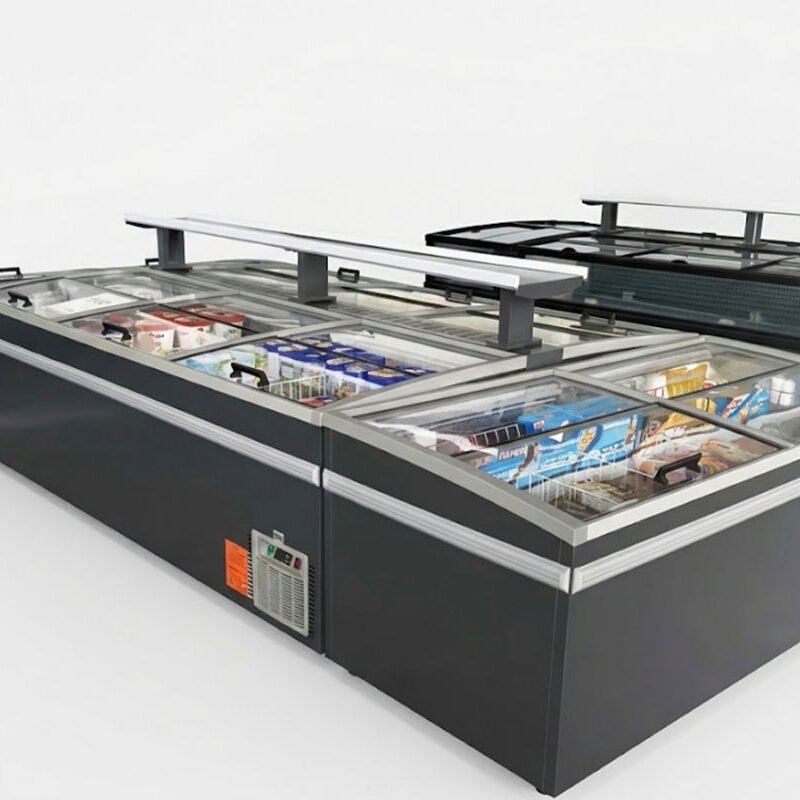
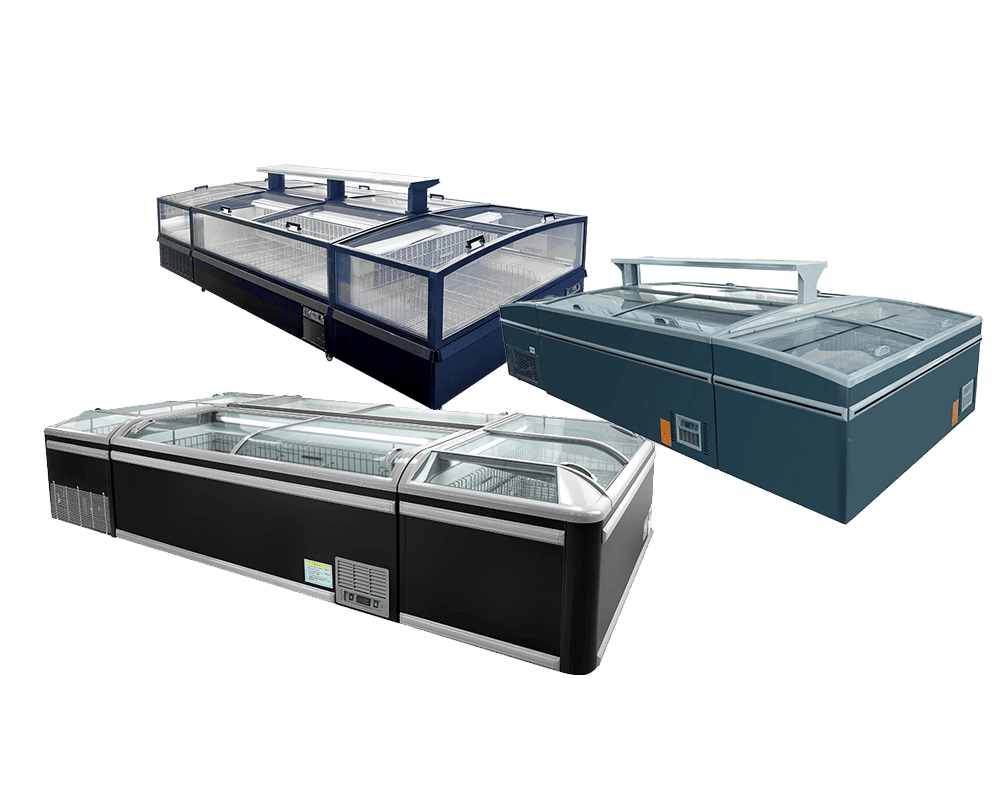
Supermarket Island Freezer
Supermarket island freezers are engineered for large-volume frozen food merchandising. Positioned in central aisles, they provide multi-directional customer access and strong visual impact.
Their horizontal structure supports bulk storage and efficient product replenishment, making them ideal for supermarkets and warehouse-style retail formats. Modular designs allow flexible layout adjustments as product categories or store configurations change.
Beverage Refrigerated Display Chillers
Beverage refrigerated display chillers are optimized for fast-moving drink categories that require consistent cooling and attractive presentation. Adjustable shelving systems allow flexible arrangement for bottles, cans, and specialty beverages.
These units are often placed near entrances, checkout zones, or dedicated beverage aisles to support impulse purchasing. Stable cooling performance ensures beverage quality even with frequent door openings throughout the day.
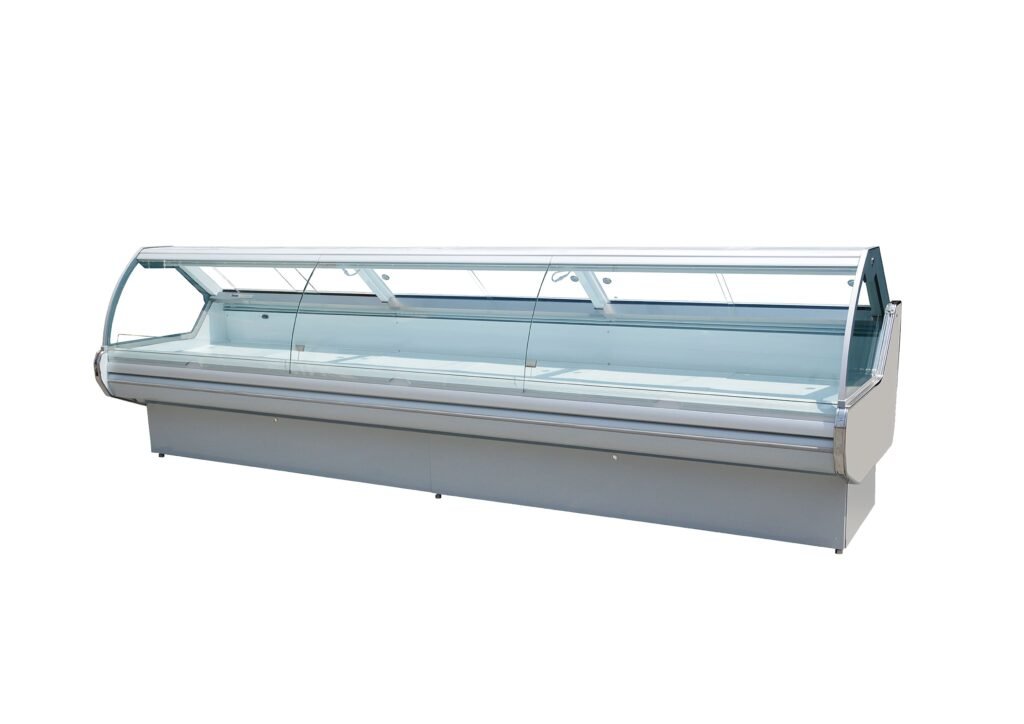
Commercial Meat Display Refrigerator
Commercial meat display refrigerators are engineered to maintain strict temperature ranges required for fresh meat, poultry, and deli products. Controlled airflow and precision cooling help preserve freshness while reducing moisture loss.
These cabinets enhance product presentation through clear glass structures while supporting hygiene standards and food safety regulations. They are widely used in butcher sections, fresh food markets, and supermarket meat departments.
Bakery Refrigerated Display Cabinets
Bakery refrigerated display cabinets are designed to balance temperature and humidity for delicate products such as cakes, pastries, and desserts. Controlled internal conditions help preserve texture, appearance, and shelf life.
Elegant glass designs enhance visual appeal, making these cabinets suitable for in-store bakeries, cafés, and specialty dessert counters where presentation directly influences purchasing decisions.
Fidge Chiller Multideck
Fridge chiller multideck units are designed to maximize vertical display capacity while delivering stable and efficient refrigeration performance across every shelf level. These open or glass-front display systems are widely applied in supermarkets for fresh produce, dairy items, ready-to-eat foods, and packaged chilled products.
By utilizing advanced multi-layer airflow circulation, fridge chiller multideck cabinets maintain uniform temperatures throughout the entire display area. This ensures consistent product freshness, supports food safety standards, and allows retailers to create clean, well-organized layouts that enhance shopping efficiency and visual merchandising impact.
In Conclusion
With advanced manufacturing capabilities, internationally recognized quality certifications, and flexible customization options, Eddysen delivers dependable cold chain solutions to retailers worldwide through stable and efficient supply chains. With nearly 20 years of experience, Eddysen stands out as a trusted display fridge supplier and supermarket refrigerator supplier.
Choosing the right commercial refrigerated display equipment not only enhances operational efficiency and product protection but also builds long-term competitiveness when working with experienced suppliers like Eddysen. Our expertise ensures high-quality, reliable solutions that help retailers meet evolving customer demands while maximizing performance and energy efficiency.
Frequently Asked Questions
What Are the Latest Innovations in Commercial Refrigeration?
Commercial refrigeration is evolving with a focus on energy efficiency, sustainability, and performance. Smart refrigeration systems are becoming more common, allowing remote monitoring of temperature, humidity, and even troubleshooting in real-time. New eco-friendly refrigerants like CO2 and hydrocarbons are replacing older ones, helping reduce carbon footprints. Many modern fridges and freezers now come with self-cleaning features to reduce maintenance needs and ensure food safety. The use of LED lighting and eco-friendly insulation materials is also improving energy efficiency across the industry.
What Are Common Problems With Display Freezers?
Display freezers often face issues such as temperature fluctuations, frost build-up, compressor malfunctions, and defrosting problems. Temperature instability is typically caused by faulty thermostats or dirty condenser coils. Frost can accumulate if the freezer door is left open too long or if the door seals are worn out, reducing cooling efficiency. Compressor issues can prevent proper cooling, with signs like strange noises or no cooling at all. If the automatic defrost system fails, ice can accumulate, affecting the freezer’s performance.